
Material Reality: The First Two Years of SPLICE Magazine
For the 45th anniversary of SPLICE I chose excerpts from the first three volumes of the newsletter, now magazine, to give a snapshot of what has changed and what has not. These excerpts cover the first two years of publication, from spring of 1978 to spring of 1980, and are by no means exhaustive. What struck me about these first years of the newsletter was the material analysis. The pages were scrappy and political. The founding members of the co-op knew there was no base for filmmaking in Saskatchewan—that is why they started the Filmpool—and much ink was spilled about how to grow the production base for Saskatchewan filmmakers and film workers. Issues unique to the terrain of the province—such as the interest in a Saskatoon location – are similar to this day. It behooves the current membership to examine these questions closely themselves, to compare what has changed and what has not, in order to make clearer analysis in the present.
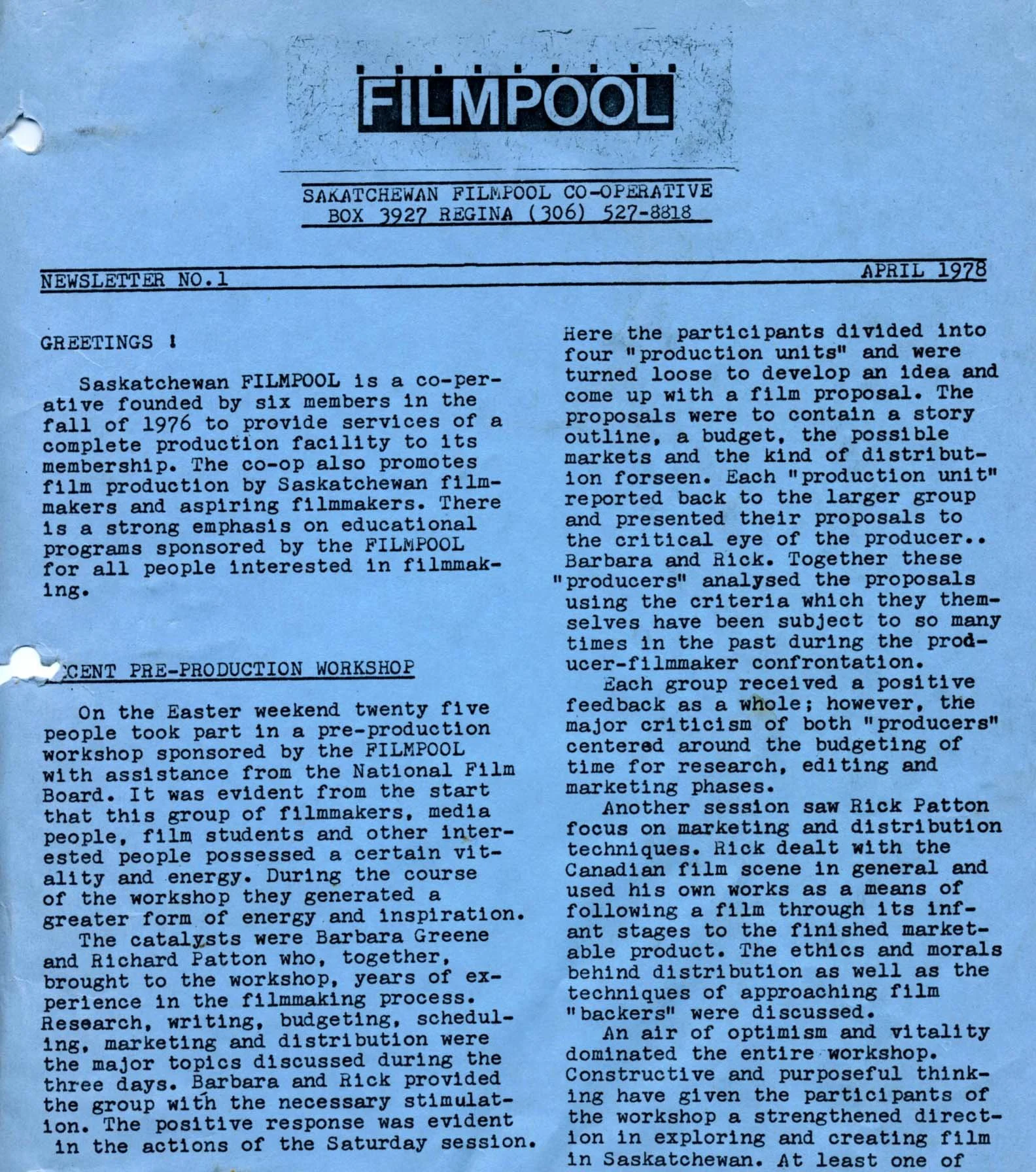
SPLICE 1978 - Volume 1 - Issue 1
The first edition of SPLICE, then a newsletter for the one-year old Saskatchewan Filmpool Cooperative.
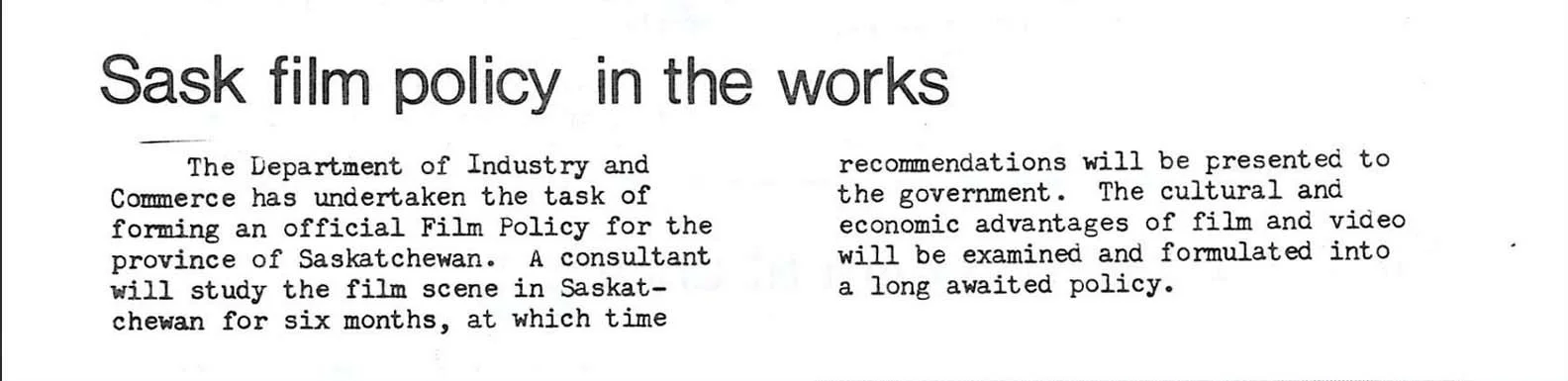
SPLICE 1978 - Volume 1 - Issue 1
The contemporary membership may not know that the Filmpool, and the Filmpool’s production grants, predate any provincial filmmaking support.
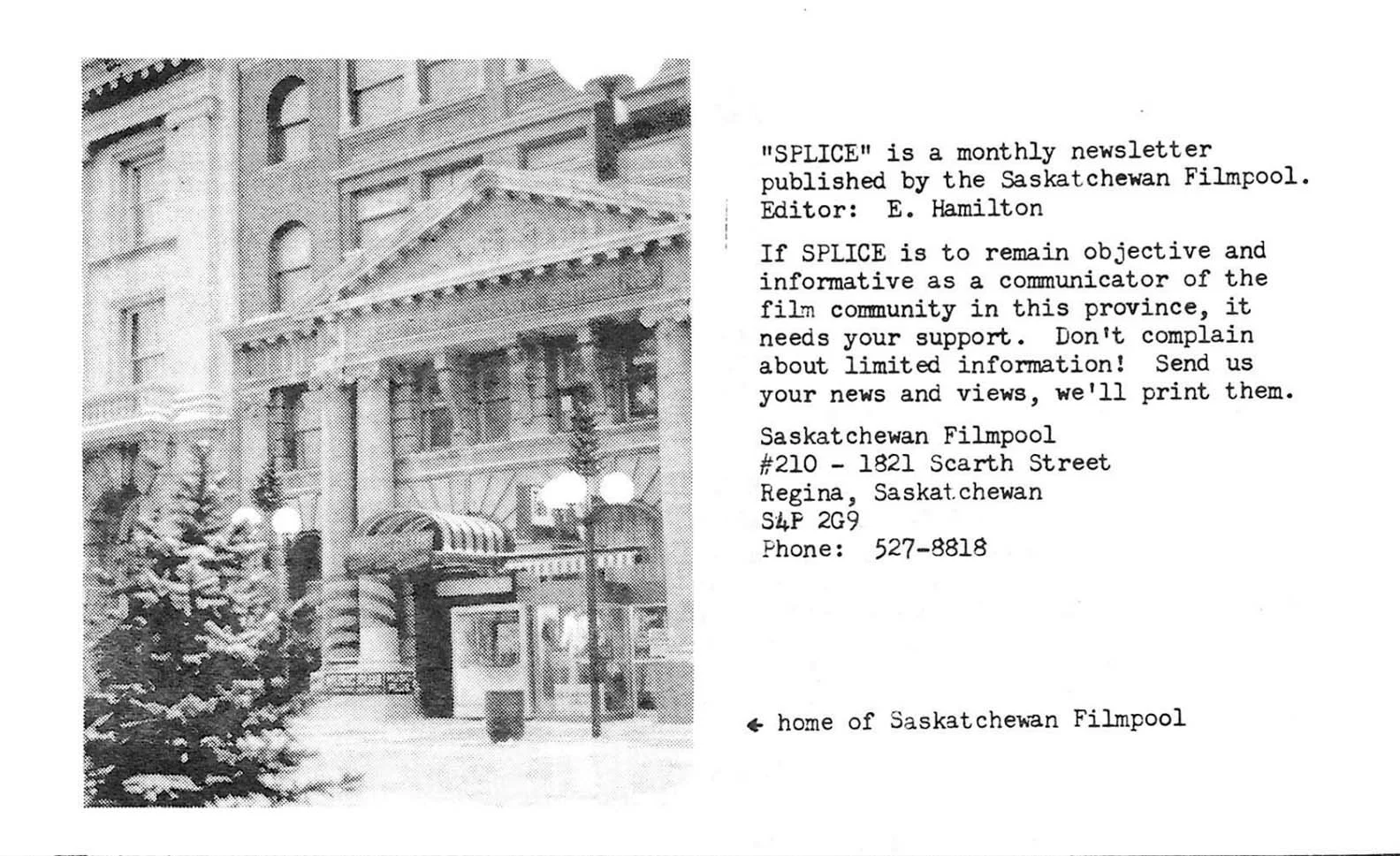
SPLICE 1978 - Volume 1 - Issue 1
The Filmpool’s home for the past twenty years is right across the Scarth Street mall from the Filmpool’s original location, as seen here. Despite stints on Broad St. and Rae St., I find some comfort in the Filmpool’s continuum focused on the cultural hub of downtown Regina.
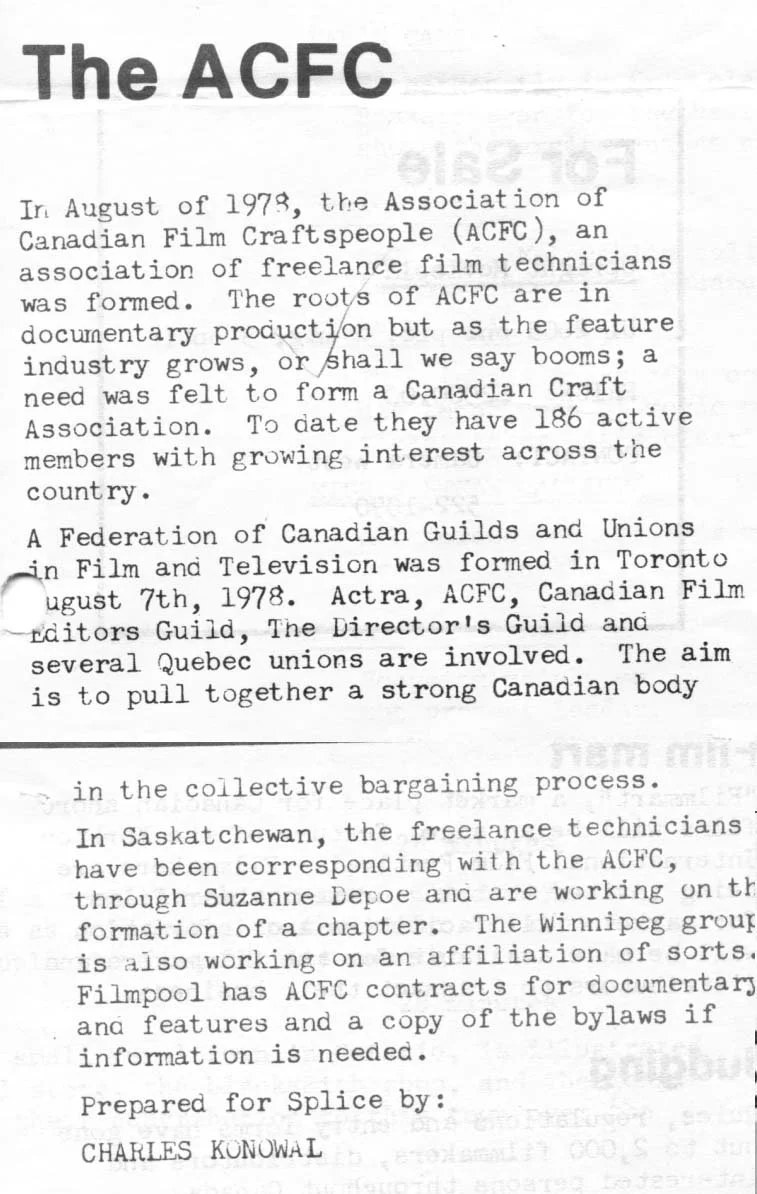
SPLICE 1979 - Volume 1 - Issue 7
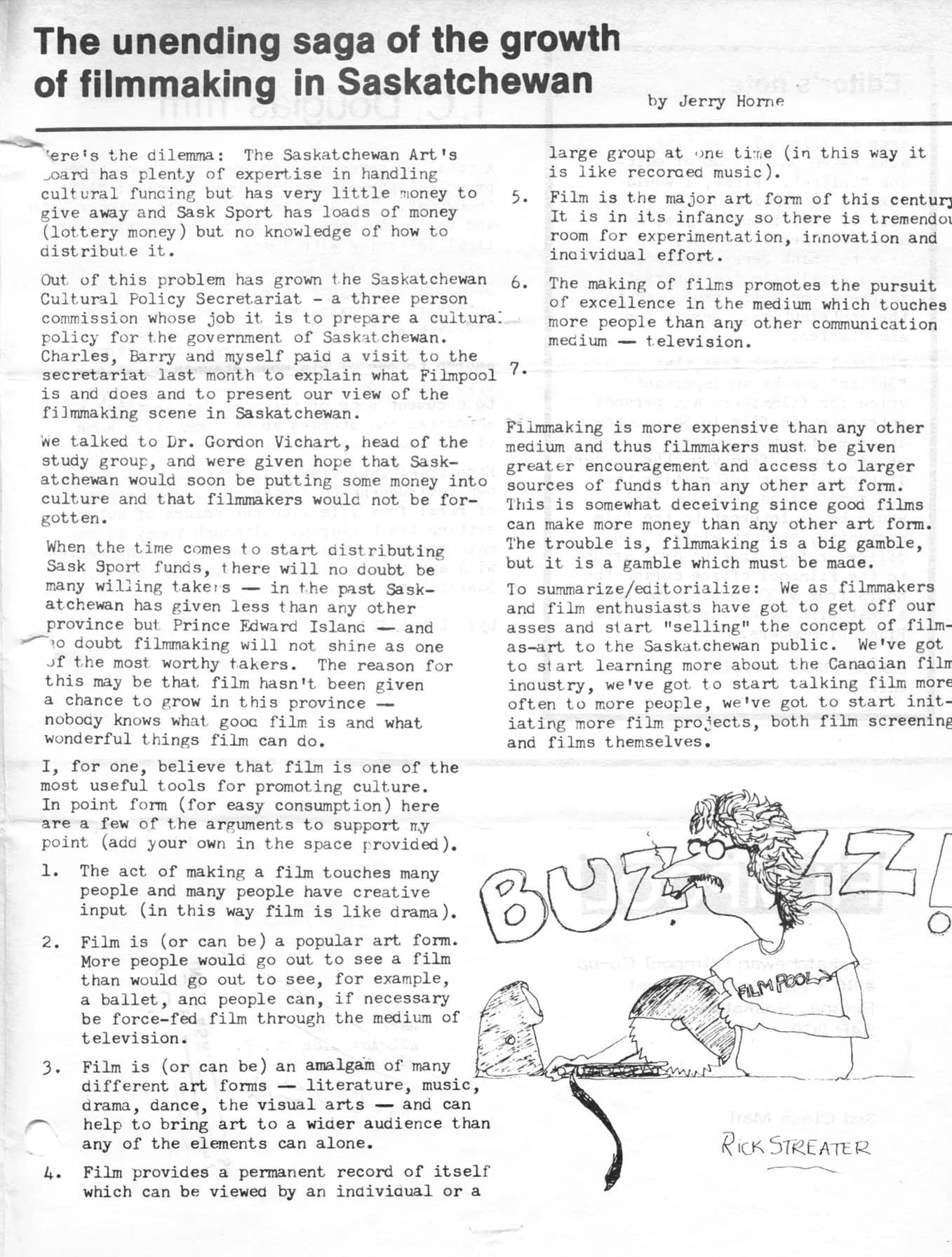
The first organized film union in Canada, the APC (Association professionnelle des cinéastes), was formed at the NFB (Montreal) in 1963. 16-years later, the film labour movement had reached the point of national associations.
SPLICE 1979 - Volume 1 - Issue 7
This article from Jerry Horne positions filmmakers as a class needing to advocate for themselves, as if advocacy is the only obstacle standing in the way of prairie cinema. I think this reflects the period of flush cultural funding in Canada at the time. There is no discussion of the material incentives for production, proximity to major production bases, etc . Further down the list, another article will also tackle this question of production funding.

SPLICE 1979 - Volume 1 - Issue 7
I just love this masthead.

SPLICE 1979 - Volume 1 - Issue 7
In the spirit of things that remain the same, the Yorkton Film Festival’s Golden Sheaf Award featured prominently in these early issues when Filmpool-supported film Razor in the Wind (Stephen Surjik, 1979) won for Best Short Drama.
SPLICE 1980 - Volume 2 - Issue 6
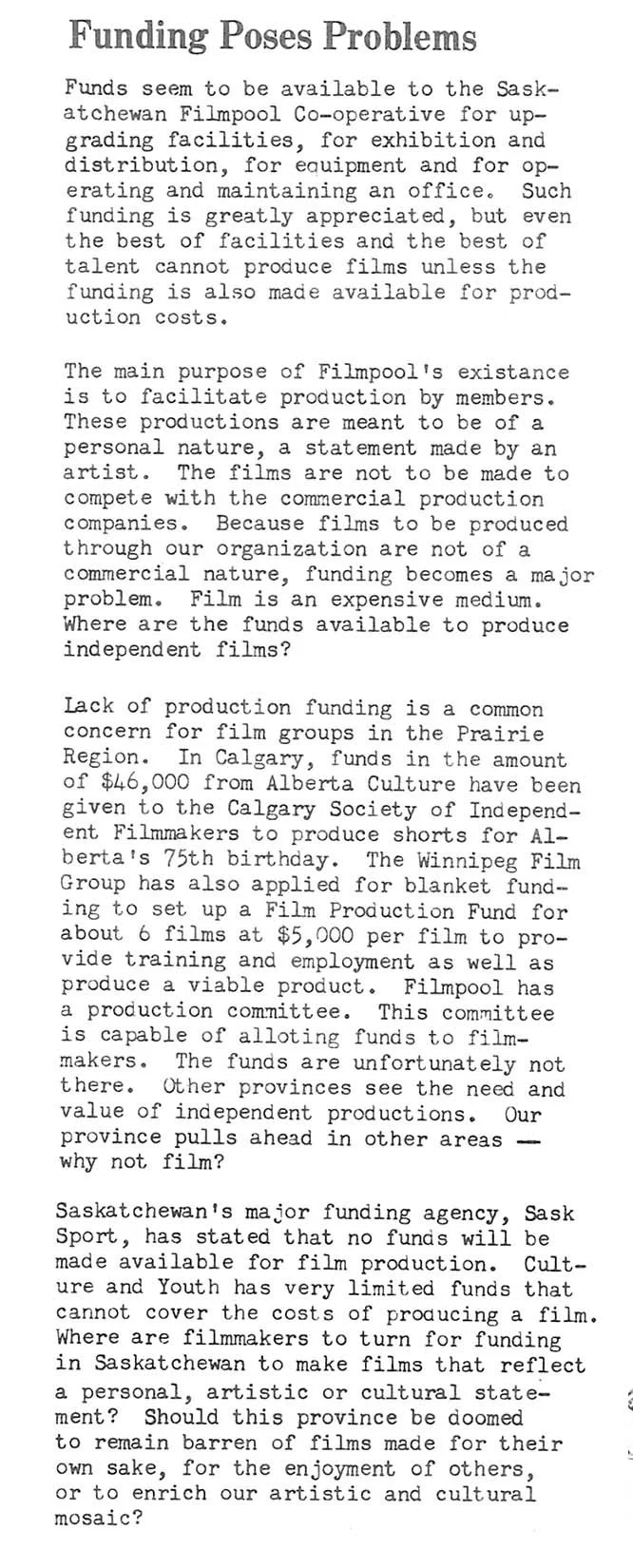
I must say, as someone who has written extensively about the issues of film financing in this province, this article from four decades ago hits me right in the chest. Later, SK Arts (then Saskatchewan Arts Board) and entities like Sask Film will increase funding for independent productions, but the lack of a SODEC-like model – where the public funder invests as a public “studio” in the development of cultural production, allowing funding from multiple parties – means cultural production is still held back in English Canada.
SPLICE 1980 - Volume 2 - Issue 6
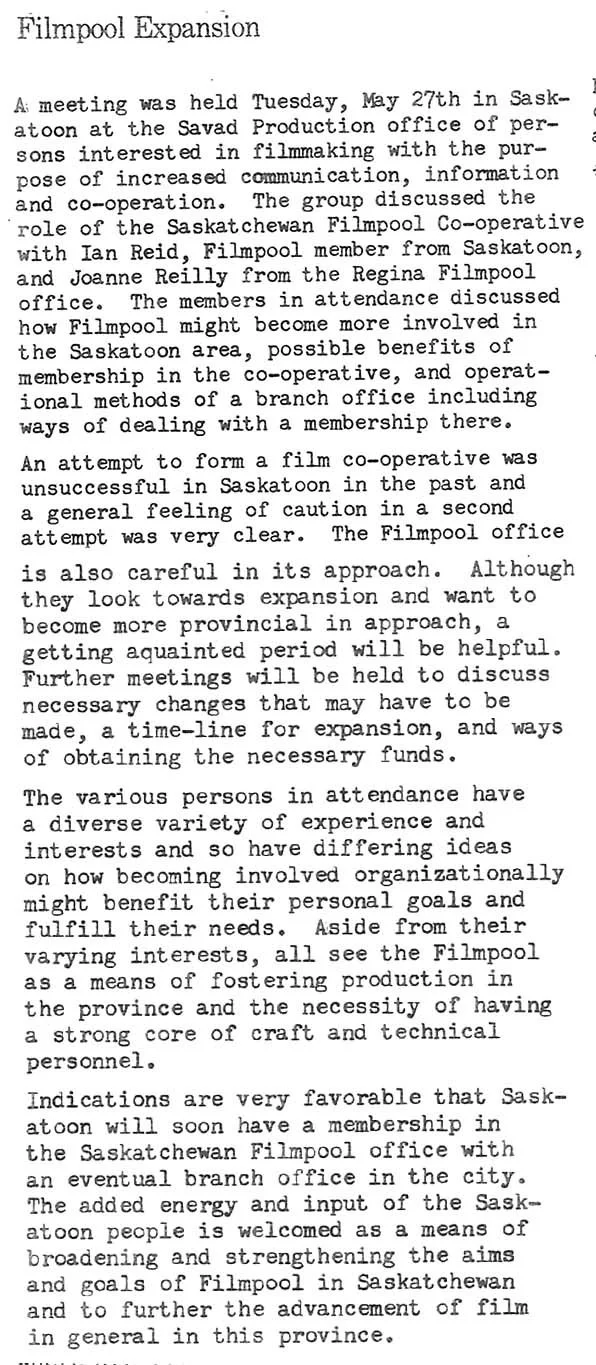
Finally, the material condition of Saskatchewan’s two major urban centres being nearly the same size, but 250km apart, was an issue the Filmpool grappled with from the beginning. The issue of satellite locations is still current in our membership. While an equipment rental partnership with other arts orgs is probably a more realistic avenue, I do love the gumption, enthusiasm and sheer confidence around the Filmpool’s “eventual branch office in [Saskatoon.]”